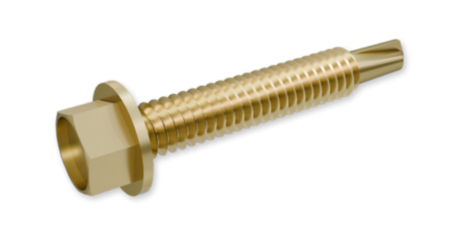
Self-Drilling Screws
ID:Self-Drilling Screws (Unit : 1,000 pcs)- Stainless Steel
- Carbon Steel
- Industrial
Ray Fu specializes in self-drilling screw manufacturing, offering custom drill points, threads, head styles, materials, and coatings for different applications.
With flexible production capabilities, technical expertise, and strict quality control, we deliver consistent fasteners tailored to your project requirements.
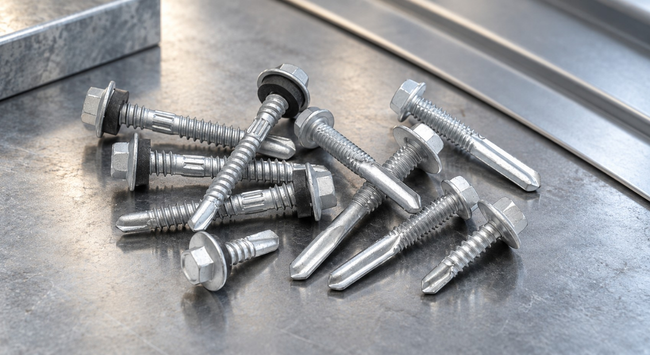
Why Should You Use Self-Drilling Screws?
Self-drilling screws combine drilling, thread forming, and fastening in one step. Their drill-shaped points penetrate materials before the threads engage, eliminating a separate pilot-hole operation in many applications. This helps reduce installation time, labor, tools, and process steps.
These screws suit applications from sheet metal and steel framing to roofing, and wood-to-steel connections. Different drill points, head styles, materials, and coatings can be selected based on material thickness, joint design, and environmental conditions. Hex washer, pan, wafer, and flat heads provide flexibility, while corrosion-resistant finishes support indoor and outdoor applications.
How to Choose the Right Self-Drilling Screws?
Not every self-drilling screw can drill through the same material. Before ordering, consider the drilling thickness, point size, head, thread, material, coating, and installation environment.
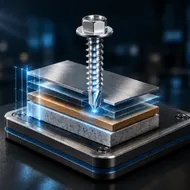
1. Match the Drill Point to Material Thickness
Self-drilling screws are available with different drill-point designs to match the material being penetrated. Common general-purpose points range to #5, while Ray Fu can also manufacture No. 6, to No. 8, and No. 10 points for applications requiring different or greater drilling capabilities.
| Drill Point | General Application |
| #1 | Very thin sheet metal |
|
#2 |
Thin-gauge metal |
|
#3 |
Medium-gauge metal |
|
#4 |
Thicker metal |
|
#5 |
Heavy-gauge steel and thicker sections |
|
#6 to #8 |
Extended drill-point designs for thicker or application-specific metal fastening |
|
#10 |
Specialized high-capacity drill-point applications |
A higher point number generally indicates a longer or more aggressive drill section, but drilling capacity should not be determined by point number alone. Screw diameter, point geometry, material hardness, and the total thickness being drilled also affect performance.
For points above #5, specifications can vary between manufacturers, so the actual drilling capacity should be confirmed for the selected screw design. The drill point must also pass completely through the material before the threads begin to engage for proper installation.
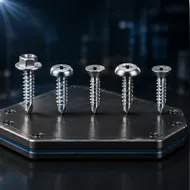
2. Choose the Right Head and Thread
Head styles such as hex washer, pan, wafer, flat, and pancake affect bearing area, clearance, appearance, and installation. For exterior roofing or cladding, a sealing washer may also be required.
Thread geometry should match the substrate and provide sufficient engagement. Coarser threads are commonly used for thinner materials, while finer threads may suit thicker metal applications.
3. Select Material, Coating, and Environment
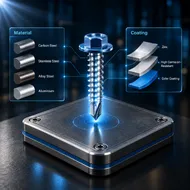
Carbon steel offers strength and drilling performance, while zinc-plated steel suits many general applications. For greater corrosion resistance, consider stainless steel or bi-metal screws. Also consider moisture, outdoor exposure, and galvanic corrosion when joining different metals.
Self-Drilling Screws vs. Self-Tapping Screws: What are the Differences?
The terms self-drilling and self-tapping are related, but they do not describe the same fastener.
-
Self-Drilling Screws
A self-drilling screw is essentially designed to perform an additional operation. Its drill-shaped point first creates the hole, and the threads then form or cut mating threads as the fastener is driven. In suitable materials, no separate pilot hole is required. -
Self-Tapping Screws
A self-tapping screw forms its own threads as it enters the material, but it does not necessarily drill its own starting hole. Depending on the screw design and substrate, a correctly sized pilot hole may need to be prepared first.
| Feature | Self-Drilling Screw | Self-Tapping Screw |
|---|---|---|
|
Creates its own hole |
Yes |
Generally requires an existing or pilot hole for metal applications |
|
Forms its own threads |
Yes |
Yes |
|
Point |
Drill-bit-shaped point |
Sharp, blunt, or thread-forming/cutting point |
|
Installation steps |
Drilling and fastening in one operation |
Hole preparation and fastening may be separate |
|
Common applications |
Sheet metal, steel framing, roofing, metal construction |
Sheet metal, plastics, wood, and pre-drilled assemblies depending on design |
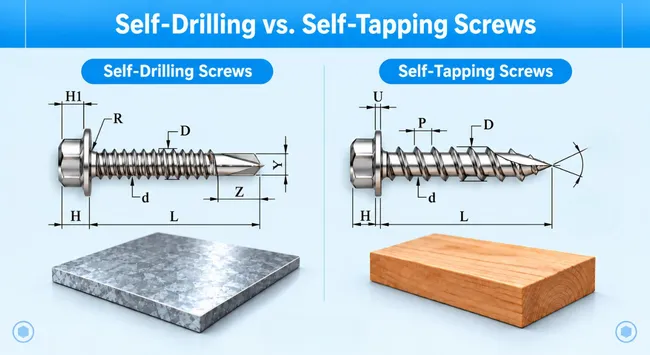
The two types should not be used interchangeably unless the application, substrate, hole size, and fastener specifications confirm that the substitution is suitable. Using the wrong type can affect drilling performance, thread engagement, installation quality, and joint performance.
Our Self-Drilling Screw Specifications & Custom Manufacturing Capabilities
Ray Fu manufactures self-drilling screws in a wide range of materials, sizes, thread types, drill points, head styles, and surface treatments. We also provide flexible customization for dimensions, thread and head designs, coatings, packaging, and other application-specific requirements.
You can provide drawings, samples, or technical specifications, and our team can support the project from design review and feasibility assessment through trial production and mass manufacturing. This allows us to develop self-drilling screw solutions that match different product, performance, and sourcing requirements.
Materials
Sizes
Head Styles
Thread Types
Drill Point Types
Surface Treatments
MOQ
Lead Time
How to Order Self-Drilling Screws from Us
1. Drawing or Sample Submission

2. Manufacturing Assessment & Quotation

3. Order Confirmation

4. Technical Drawing Preparation

5. Production Feasibility Review

6. Customer Approval
7. Trial Production

8. Sample Inspection & Approval
9. Mass Production, Packaging & Delivery
Work with Ray Fu
Reliable Self-Drilling Screw Supplier for Your Next Project
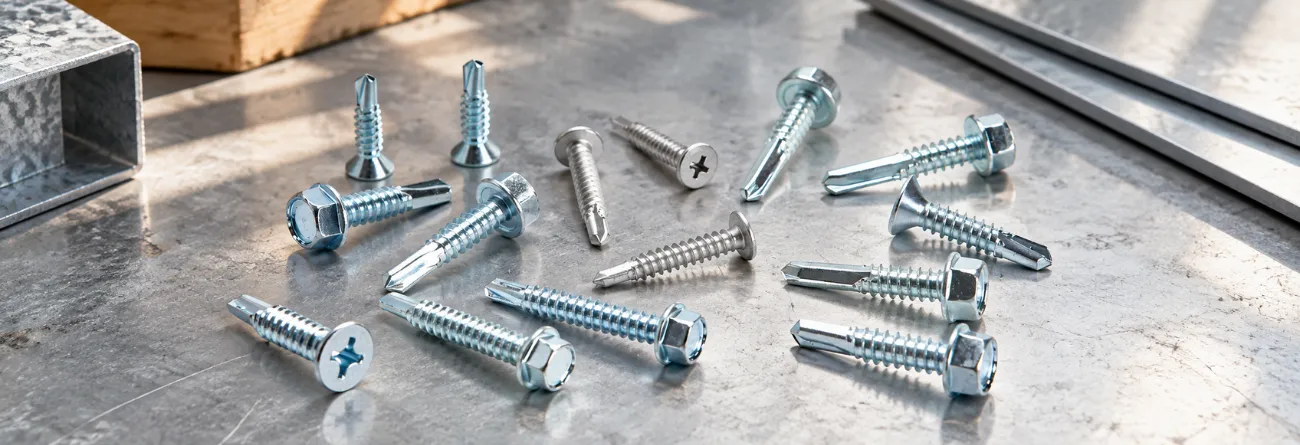
Ray Fu provides self-drilling screws designed for efficient installation across metal, roofing, and construction applications. As an experienced self tapping screws manufacturer, we support custom specifications, from drill points and threads to head styles, materials, and coatings. Our manufacturing process includes technical review, trial production, inspection, and quality control to ensure consistent results. Looking for the right fastener for your project? Contact us to discuss your requirements and find a suitable solution.