What are the Best Screws for Deck Boards: Full Selection Guide
- #Deck Board Screw Application
- #Decking Screws
- #Industrial Fasteners
- #Screw Manufacturing
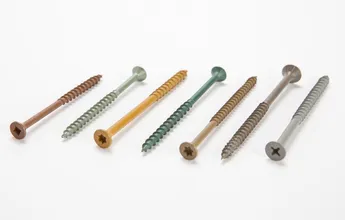
Why Choosing the Right Decking Screws Matters
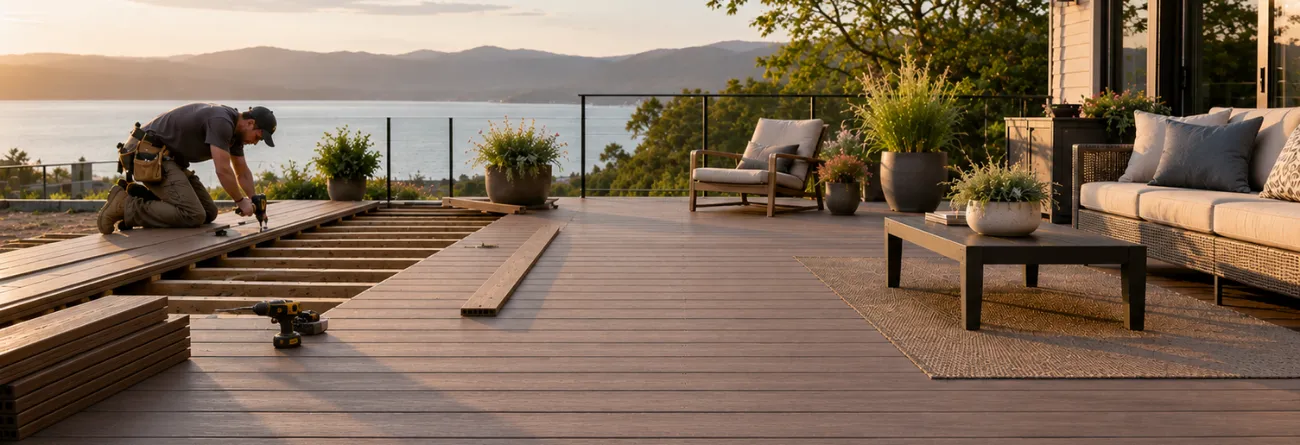
It is also important to use the right fastener for the right job. Deck screws are designed to hold deck boards firmly in place and keep the surface secure over time. Their job is to handle light-duty fastening across wide areas, not to support heavy loads. Because of this, deck screws should never be used in structural uses like ledgers, beams, or framing connections. These parts require fasteners built for strength and flexibility under stress, such as structural screws.
The right screws also help extend the service life of the deck. Outdoor decks constantly face rain, humidity, and chemicals from pressure-treated lumber. If the screw material or coating is not suitable, corrosion can weaken the fastener and reduce the deck’s long-term strength. Using fasteners approved for treated wood is also important to avoid chemical reactions that may speed up corrosion.
Appearance is another key reason screw selection matters. Poor-quality or unsuitable screws may leave rust stains, dark streaks, split wood, or raised material around the screw head. Well-designed decking screws can drive cleanly, sit flush, reduce splitting, and create a more professional finish. Although high-quality screws may cost more at first, they can reduce future repairs, help protect the deck’s appearance, and prevent problems caused by failed or seized fasteners.
Different Types of Deck Screws by Materials
Wood Decking Screws
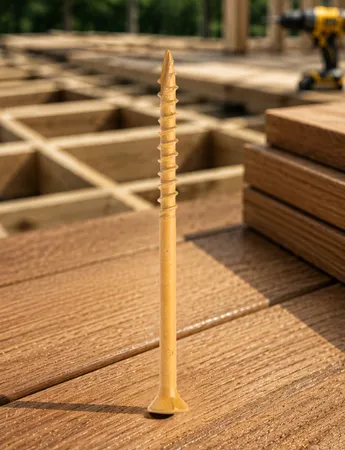
Wood decking screws are designed for natural wood boards, such as cedar, redwood, hardwood, and pressure-treated lumber. These screws usually have deep, sharp, aggressive threads that bite firmly into wood fibers. This helps pull the board tightly against the joist and reduces the chance of loosening over time.
Many wood deck screws also use sharp self-drilling or Type 17 points, which help the screw enter the wood more smoothly. This design reduces installation effort and helps prevent splitting, especially near board ends.
Another common feature is a bugle-shaped head. This head allows the screw to sit flush with the deck board surface without sinking too deep and cracking the wood. Some wood decking screws also include cutting ribs under the head, which clear wood fibers as the screw drives in. This creates a cleaner finish and helps avoid raised material around the fastener.
Composite Decking Screws
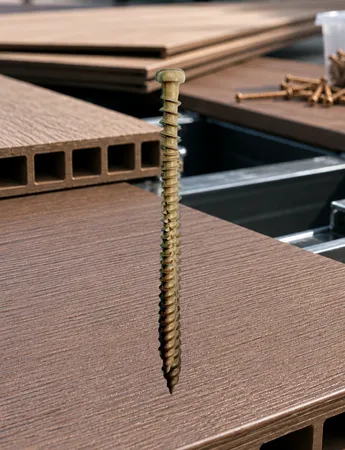
Composite decking screws are made for composite and PVC deck boards, which behave differently from natural wood. Composite boards are usually denser and may expand or contract with temperature changes.
If a regular screw is used, the material can rise around the screw head and form an unattractive bump. This is often called mushrooming. To reduce this problem, composite decking screws often have reverse upper threads near the head. These threads help pull displaced material back down into the hole instead of pushing it upward.
Many composite screws also use smaller, low-profile heads that sit neatly on the surface without damaging the board. Some designs include high-low threads to balance grip and material control.
Composite decking screws are often color-matched, making them a good choice when appearance is important. However, they are not ideal for natural wood boards because their smaller heads may not provide enough holding surface to stop wood from lifting, twisting, or cupping.
Stainless Steel Decking Screws
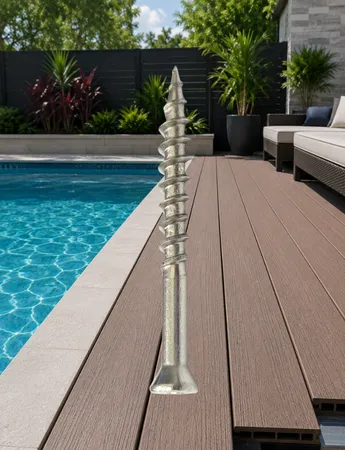
Stainless steel decking screws are chosen when corrosion resistance is the main concern. Unlike coated screws, stainless steel screws do not rely only on an outside protective layer. Their corrosion resistance comes from the material itself. This makes them suitable for wet, humid, coastal, or premium outdoor decking projects.
Grades 304 and 305 stainless steel are commonly used for standard residential decks and general outdoor construction. Grade 316 stainless steel offers higher corrosion resistance because it contains molybdenum, making it a better option for coastal areas, marine environments, poolside decks, and places exposed to salt or chemicals.
Another advantage is that stainless steel screws are generally less brittle than some hardened coated screws, so they are less likely to snap when they hit dense wood or knots during installation.
| Type of Deck Screw | Main Material or Design | Key Features | Best Used For |
|---|---|---|---|
| Wood Decking Screws | Designed for natural wood boards | Aggressive threads, self-drilling tip, bugle head, possible head ribs | Cedar, redwood, hardwood, pressure-treated lumber, stairs, railings |
| Composite Decking Screws | Designed for composite and PVC boards | Reverse upper threads, smaller head, high-low threading, color-matched options | Composite decking, PVC decking, synthetic deck boards |
| Stainless Steel Decking Screws | 304, 305 or 316 stainless steel | Built-in corrosion resistance, long service life, stain resistance | Coastal decks, poolside decks, and wet areas |
Different Types of Deck Screws by Head Design
-
Countersunk Head Decking Screws
Countersunk head decking screws are one of the most popular choices for deck fastening. The head is designed to sink into the deck board and sit flush with the surface. This helps create a smooth, clean finish after installation.
Because the screw head does not stick out, it also reduces the chance of catching shoes, furniture, or other objects on the deck surface. Countersunk heads are also useful because they help reduce splitting when the screw is driven into the deck board.
-
Cylindrical Head Decking Screws
Cylindrical head decking screws are another common option for deck installation. This type of head can also be driven flush into the deck surface, helping the finished deck look neat and even.
The cylindrical head design is made to reduce splitting during fastening. This makes it suitable for deck boards that need a clean surface while still maintaining strong fastening performance. It is often used when installers want both a smooth appearance and reliable holding power.
What to Consider When Choosing Deck Board Screws
Sizes and Length
One of the most common questions is what size screw for deck boards should be used. For many standard deck boards, #8 and #10 deck screws are common choices. #10 screws are often preferred when working with thicker or denser boards because they provide stronger holding power. Decks.com notes that wood deck screws are available in different lengths, commonly from 1-5/8 inch to 3-1/2 inch, and most have a #8 or #10 shank diameter.
For screw length, the general rule is to choose a screw long enough to pass through the deck board and penetrate at least 1 inch into the joist or frame below. For common 5/4 deck boards, 2.5 to 3-inch screws are usually used. For thicker 2x6 decking or nominal 2-inch lumber, 3 to 3.5-inch screws may be needed to create a stronger attachment.
Screws that are too short may not hold the board securely, while screws that are too long can require too much driving torque and may increase the risk of stripping or snapping.
Screw Head Design
The screw head affects both holding strength and the final look of the deck surface. For natural wood decking, a bugle or flare-shaped head is often preferred because it spreads pressure across a wider area. This helps the screw pull the board down without sinking too deeply or cracking the surface. It also allows the screw to sit flush, which creates a safer and cleaner deck surface.
Some deck screws include ribs under the head. These ribs help remove wood fibers as the screw is driven into the board, allowing the head to seat more cleanly. This is especially useful when working with softwood or pressure-treated lumber, where raised fibers around the screw head can affect the finish.
For composite decking, smaller trim-style or low-profile heads are often used. These heads help reduce surface distortion and are commonly paired with composite-specific thread designs. Some composite fastening systems also offer color-matched screws to help the fastener blend into the deck board surface.
Drive type is also important. Star drive, 6-Lobe, square drive, and other high-grip drive systems are often easier to install than standard Phillips heads because they reduce cam-out, which happens when the bit slips out of the screw head. This helps protect the screw head, improves driving control, and makes installation easier.
Screw Thread Design
Thread design determines how well the screw grips the decking material. For natural wood, coarse and deep threads are commonly used because they bite into wood fibers and help hold the board tightly against the joist. This is important because wood expands, contracts, twists, and cups as moisture levels change.
Some deck screws have serrated threads or cutting notches. These act like small saw teeth as the screw enters the wood. They help reduce driving torque and make installation easier, especially in denser wood. This design can also help lower the risk of splitting because the screw cuts more cleanly through the material.
Composite decking screws often use reverse or upper threads near the head. These threads are designed to pull displaced composite material back down into the hole. For some screws, a smooth upper shank may also be used to help pull the board tightly against the joist before the lower threads lock into the framing.
Material and Coating
Deck screws must resist moisture, outdoor exposure, and chemicals found in pressure-treated lumber. If the screw material or coating is not suitable, corrosion can weaken the fastener and leave visible stains on the deck surface. For treated wood, coastal projects, or humid locations, corrosion resistance should be a top priority.
Coated deck screws usually have a protective surface layer, such as zinc, polymer, epoxy, or ceramic coating. They are often a cost-effective choice for many inland residential decks. However, because their protection depends on the coating, scratches during installation can reduce their corrosion resistance over time.
As we’ve mentioned before, stainless steel deck screws provide stronger long-term corrosion resistance because the protection comes from the metal itself. Grades 304 and 305 are commonly used for general outdoor decks, while 316 stainless steel is the better choice for coastal, marine, poolside, or high-moisture environments because it offers higher corrosion resistance.
Deck Screws vs. Wood Screws: What are the Differences?
-
Deck Screws
A deck screw is a specialized exterior wood screw designed for fastening deck boards to joists. Both deck screws and regular wood screws can join wood, but deck screws are built for outdoor exposure, treated lumber, and long-term holding strength. They often have corrosion-resistant coatings or stainless steel construction, sharper tips, deeper threads, and heads designed to sit flush on the deck surface. -
Wood Screws
Regular wood screws are a better fit for indoor woodworking, furniture, cabinets, and other dry applications. They are not usually designed to handle rain, humidity, or chemicals in treated lumber. When used outdoors, they may rust, weaken, or lose holding power over time. That is why deck screws are the better and safer choice for fastening deck boards.